The independent appliance repair shop across the Northeast
Freezer Repair — Book a Visit Today
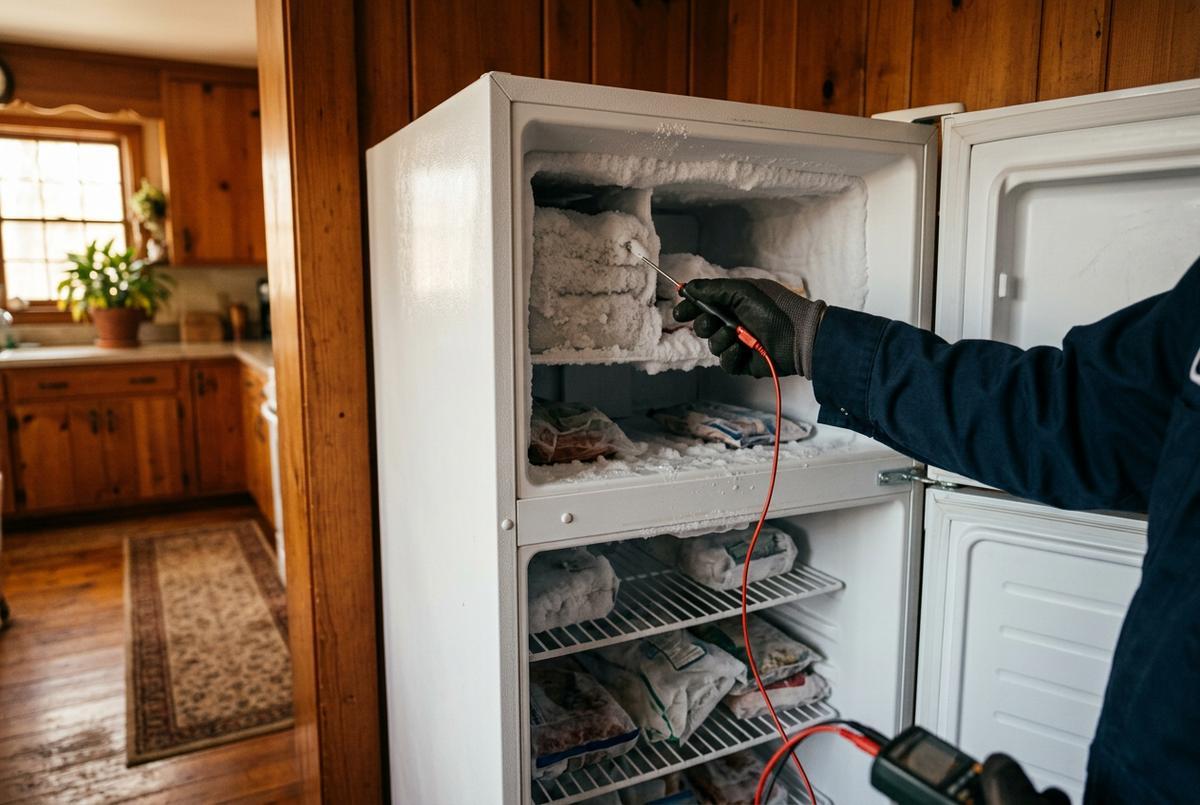
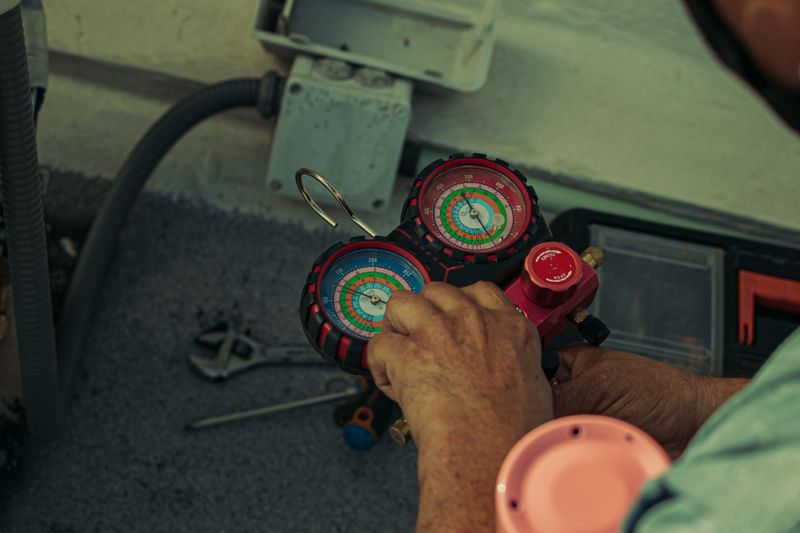
We repair freezers across Connecticut and the surrounding states, and you can call us to set a window. A freezer quits quietly. You notice soft ice cream or a puddle at the basement door, not a loud bang. Most calls come down to a few parts: a frost-choked evaporator coil, a defrost heater or thermostat that stopped cycling, a worn door gasket, a failing start relay, or a compressor that runs but never pulls the temperature down. We start by reading the actual temperature, then check airflow, then the defrost cycle, then the sealed system. Chest units, uprights, garage freezers, built-ins, we work them all as an independent shop, and we're used to hauling tools down narrow Connecticut basement stairs. Tell us what you're seeing and hearing.
Call (888) 826-9217- A real person answers
- Open 7 days
- Written quote before work starts
Taking calls until 5:00 PM ET
The freezer symptoms we hear most
- Everything's soft but the light still comes on Sealed system or compressor start components. Power is fine, cooling isn't
- There's a wall of ice on the back panel Defrost failure: heater, bimetal thermostat, or a control board that isn't running the cycle
- Water keeps showing up on the floor Clogged defrost drain, iced-over drain tube, or a gasket letting warm air in
- It runs nonstop and never shuts off Thermostat or thermistor misreading, dirty condenser coils, or refrigerant loss
- Loud buzzing then it goes quiet again Start relay or overload on the compressor, sometimes a failing condenser fan motor
Safe things to check first
Worth a look before you call — sometimes it saves you the visit.
- 1Read a thermometer inside the freezer instead of trusting the dial. You want around 0°F.
- 2Pull the unit out and look at the condenser coils. Heavy dust and pet hair block cooling.
- 3Close the door on a dollar bill in a few spots. If it slides out easily, the gasket is done.
- 4Confirm the outlet has power with a lamp, and check the breaker before you blame the freezer.
Guides & troubleshooting
How an independent local shop compares
| Elite AR | Big-box repair chains | Handyman listings | |
|---|---|---|---|
| You approve a written quote first | ✓ | ✕ | ✕ |
| A real person answers, 7 days a week | ✓ | ✕ | ✓ |
| Gas and electric, all major brands | ✓ | ✓ | ✕ |
| No manufacturer targets to hit | ✓ | ✕ | ✓ |
| Crews familiar with homes like yours | ✓ | ✕ | ✓ |
What homeowners say after the visit
“Microwave over the range went dark. They swapped the fuse and door switch and warned me what to watch for.”
Iris B.Toms River, NJ“They remembered the model from my last call and brought the matching part. That is a company paying attention.”
Walt G.Nashua, NH“Quote came by text within the hour, visit the next day, repair in forty minutes.”
Sonia H.Brooklyn, NYFreezer Repair — quick answers
How long can food stay safe while I wait?
A full freezer holds temperature roughly 48 hours if you keep the door shut. A half-full one about 24. Bags of ice or dry ice buy more time. If anything sat above 40°F for hours, throw it out.
Is a frost buildup problem worth fixing?
Usually yes. Frost on the back wall points to the defrost system: heater, thermostat, or control. Those are replaceable parts, not a dead freezer. We defrost it by hand, test the circuit, and swap what failed.
Should I unplug it before you arrive?
If it's leaking water or smells burnt, unplug it. Otherwise leave it running so we can hear and measure what it's doing. A freezer that's already off tells us far less on the first visit.
Do you work on chest freezers and garage units?
Yes. Chest freezers, uprights, standalone garage models, and built-in drawer units. Garage freezers often struggle in cold snaps because the control reads the room temperature as fine. That's a known behavior, and we check for it.
My freezer works but the fridge above it doesn't. Same problem?
Often, yes. On most combo units one evaporator cools both compartments and air moves through a damper. Blocked airflow or a stuck damper starves the fresh food side while the freezer stays cold.
When does replacement make more sense than repair?
We tell you what we find. A compressor failure in a very old unit with rust and bad door seals is a different situation from a burnt defrost heater in a five-year-old freezer. You get the diagnosis, then you decide.
How it works
- Step 1
Tell us the symptom
Call us or fill out the form and describe what you hear, smell or see. Brand and rough age help. We ask a few questions first so the tech shows up with the likely parts already on the truck.
- Step 2
We come look
Pick a window that works for you. The tech tests the machine and checks power, water and drainage, then tells you what failed in plain words. No jargon. No guessing out loud at your kitchen table.
- Step 3
Repair or straight answer
Most jobs finish on the same visit. If a part has to be ordered, we tell you what it is and why. And if the unit isn't worth fixing, we say that, then you decide.
- A real person answers
- Open 7 days
- Written quote before work starts
Why homeowners call us
- Old houses don't scare usRowhouse kitchens, narrow cellar stairs, stacked units jammed into closets. We've pulled machines through doorways built long before these appliances existed. We protect floors and trim, and everything goes back where it stood.
- Symptom-first diagnosisA dryer that runs cold and a dryer that trips the breaker are two different problems. We test before we replace. That keeps us from swapping out good parts and handing you a bill for nothing.
- Independent, not a brand agentWe repair all major brands and answer to no manufacturer. So we recommend the fix that makes sense for your machine and your budget, and that includes telling you when replacement is the smarter move.
- All major brands, gas & electricIndependent service on Whirlpool, LG, Samsung, GE, Maytag, Bosch, KitchenAid and the rest.
- Straight answersNot worth fixing? We say that out loud, and often it saves you the visit fee.
Freezer Repair
Small faults become big ones on a schedule of their own
Describe the symptoms and we'll book the visit — takes about a minute.
- A real person answers
- Open 7 days
- Written quotes
- All major brands
- Gas & electric
Rather not call? Get a free quote →